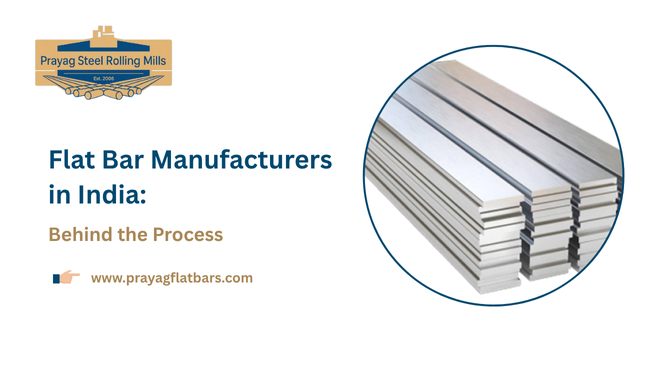
The steel industry in India has evolved into a symbol of precision and innovation, with flat bar manufacturers playing a vital role in powering multiple sectors — from construction and automotive to machinery and fabrication. Flat bars, known for their versatility and strength, are the backbone of numerous industrial applications. But what goes on behind the scenes to make sure each flat bar meets international quality standards? Let’s take a closer look at how leading flat bar manufacturers in India, such as Prayag Steel Rolling Mills, ensure perfection in every product.
1. Raw Material Selection: Setting the Foundation for Quality
Every great product begins with high-quality raw materials. The manufacturing process starts by sourcing the best grades of mild steel or alloy steel billets. Manufacturers ensure the material complies with industry standards like IS 2062 to guarantee durability, strength, and corrosion resistance. The chemical composition of the steel is carefully analyzed before production begins, ensuring consistency and quality in the final output.
2. Precision Hot Rolling: Achieving Desired Dimensions
Once the billets are ready, they undergo the hot rolling process — where they are heated and passed through rollers to achieve the desired width and thickness. This stage demands accuracy and control to maintain uniformity in shape and dimension. Advanced rolling mills equipped with modern automation technology ensure the surface finish and mechanical properties remain consistent throughout the batch.
3. Quality Testing: Ensuring Perfection Every Step of the Way
Quality assurance is at the heart of flat bar manufacturing. Each batch undergoes rigorous testing, including tensile strength, hardness, and bend tests. Surface inspection and dimensional accuracy checks ensure that only flawless flat bars leave the factory. These quality control measures help manufacturers deliver products that meet both domestic and international standards.
4. Finishing and Customization: Meeting Industry-Specific Demands
Different industries have unique requirements — from polished finishes for aesthetic applications to rough finishes for heavy-duty use. Manufacturers apply appropriate surface treatments such as pickling, polishing, or coating to enhance performance and longevity. Many leading suppliers also offer custom sizes and specifications, catering to the exact needs of their clients.
5. Sustainable Practices: Building a Greener Future
Today’s top flat bar manufacturers in India are not just focused on production but also on sustainability. By adopting energy-efficient rolling technologies, reusing water, and minimizing waste, they ensure environmentally responsible operations. This commitment to green manufacturing aligns with India’s growing push for eco-friendly industrial development.
Conclusion
The journey of a flat bar — from raw billet to finished product — reflects the expertise, innovation, and quality control of India’s top steel producers. Manufacturers like Prayag Steel Rolling Mills continue to uphold high standards, combining advanced technology with decades of craftsmanship to deliver precision-engineered flat bars trusted across industries.
Whether you’re in construction, fabrication, or heavy engineering, partnering with a reliable flat bar manufacturer in India ensures consistent performance, superior quality, and long-term value.
Frequently Asked Questions (FAQs)
1. What is a steel flat bar used for?
Steel flat bars are used in construction, fabrication, machinery manufacturing, and automotive industries. They serve as base plates, frames, brackets, and components for various structural and industrial applications due to their strength and versatility.
2. How do manufacturers ensure the quality of flat bars?
Reputed flat bar manufacturers in India follow strict quality control measures, including chemical composition testing, dimensional accuracy checks, and surface inspections. Each flat bar batch undergoes tensile and hardness tests to ensure it meets national and international quality standards.
3. What materials are used to manufacture flat bars?
Flat bars are typically made from mild steel (MS), stainless steel (SS), or alloy steel, depending on their end use. Mild steel is widely used due to its strength, flexibility, and cost-effectiveness, while stainless steel is preferred for corrosion-resistant applications.
4. Can flat bars be customized for specific requirements?
Yes, leading suppliers like Prayag Steel Rolling Mills provide customized flat bars in various thicknesses, widths, and finishes to meet industry-specific needs. Custom cutting and surface treatments are available upon request.
5. Why choose Indian flat bar manufacturers over imported options?
Indian flat bar manufacturers are known for their advanced production facilities, cost-effective pricing, and reliable quality. Companies like Prayag Steel Rolling Mills combine modern rolling technology with strict quality assurance, making them competitive in both domestic and international markets.