Introduction
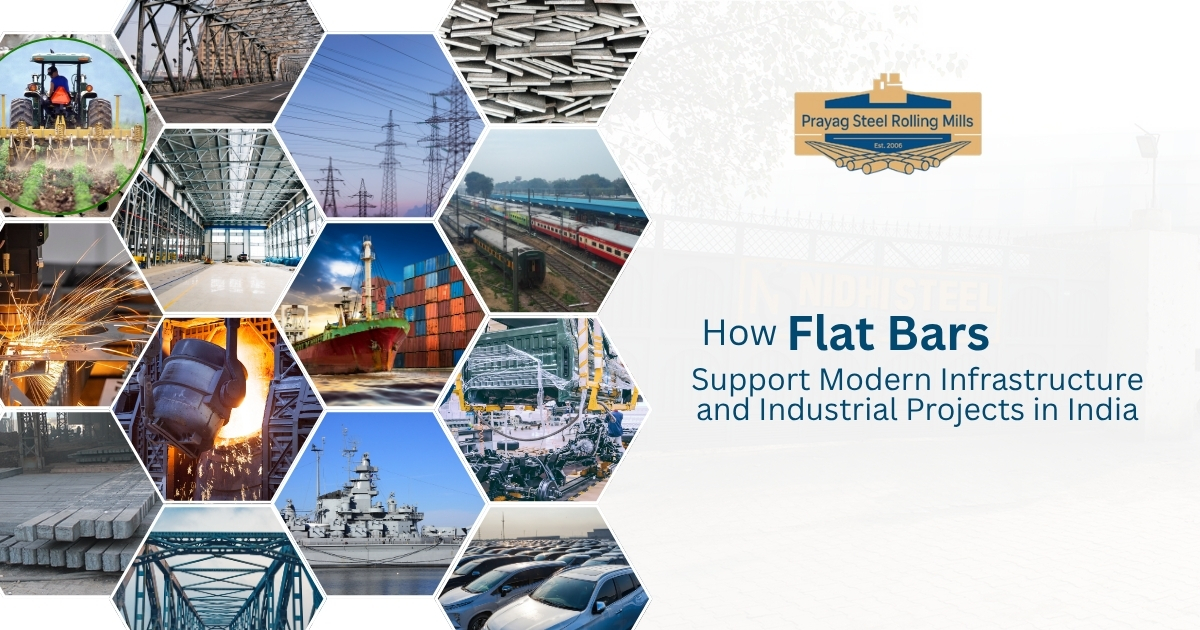
India’s rapid infrastructure growth and industrial expansion have significantly increased the demand for reliable steel products. From highways and bridges to manufacturing plants and heavy engineering projects, steel remains a key component for structural strength and long-term performance.
Among various steel products used across industries, flat bars play an important role due to their versatility, durability, and adaptability. They are used in multiple applications where strength, support, and fabrication flexibility are required.
Prayag Steel Rolling Mills contributes to this growing demand by manufacturing quality steel products that support diverse industrial requirements.
Understanding the Importance of Flat Bars
Flat bars are rectangular steel sections widely used across industries because they can be easily cut, welded, drilled, and fabricated according to project requirements.
Their practical benefits include:
- High structural strength
- Easy fabrication and processing
- Better load distribution
- Long service life
- Suitable for multiple industrial applications
These characteristics make flat bars useful for both large-scale infrastructure projects and smaller industrial operations.
Role of Flat Bars in Infrastructure Development
India continues to invest heavily in infrastructure development through projects such as highways, railway expansion, smart cities, and industrial corridors.
Flat bars contribute in several areas:
Structural Reinforcement
Steel flat bars are commonly used to strengthen structures and provide additional support.
Applications include:
- Bridges
- Buildings
- Platforms
- Industrial sheds
- Support frameworks
Transportation Infrastructure
Transportation projects require durable materials capable of handling heavy loads and long operational periods.
Flat bars are used in:
- Railway structures
- Road barriers
- Support systems
- Fabricated transportation components
Urban Development Projects
Modern cities require strong construction materials for:
- Commercial buildings
- Residential projects
- Public infrastructure
- Utility systems
Industrial Applications Beyond Construction
Flat bars are not limited to construction work. Many industries depend on them for operational and manufacturing purposes.
Engineering Sector
Engineering companies use flat bars to manufacture:
- Equipment components
- Structural assemblies
- Mechanical parts
- Customized steel products
Heavy Machinery Manufacturing
Industrial machinery often requires components capable of withstanding continuous stress and load.
Flat bars help manufacture:
- Frames
- Supports
- Machine bases
- Industrial tools
Agricultural Equipment
Agriculture equipment manufacturers use steel products in:
- Farming machinery
- Support structures
- Mechanical parts
Why Steel Quality Matters in Industrial Projects
Project performance often depends on the quality of materials used during construction and manufacturing.
Quality steel products provide:
Consistent Performance
Uniform steel products reduce fabrication challenges and improve operational efficiency.
Higher Durability
Strong steel products can withstand environmental and operational stress.
Reduced Maintenance Requirements
Quality materials often require less repair and replacement over time.
Improved Safety Standards
Reliable steel components support structural safety and stability.
How Prayag Steel Rolling Mills Supports Industry Requirements
Prayag Steel Rolling Mills focuses on producing steel products with attention to quality, manufacturing consistency, and customer requirements.
The company emphasizes:
- Consistent production standards
- Quality-focused manufacturing processes
- Reliable supply capabilities
- Industrial-grade steel solutions
By maintaining manufacturing quality and industry standards, the company serves businesses across multiple sectors.
Conclusion
As infrastructure and industrial projects continue to expand in India, the demand for reliable steel products will continue to rise. Flat bars remain an essential material because of their strength, adaptability, and broad industrial use.
With growing requirements across construction, engineering, and manufacturing sectors, quality steel production continues to play an important role in supporting long-term industrial growth.